
The Supreme Court has quashed a dowry death case, ruling that merely calling a wife 'stupid' or 'useless' does not constitute cruelty or criminal intimidation, especially without a proven nexus to dowry demands and suicide. The court emphasised the need for careful scrutiny of allegations in matrimonial cases to prevent abuse of legal processes.

The Allahabad High Court has set aside the life sentences of two men convicted in a 1980 murder case, finding they were minors at the time of the crime. While upholding their conviction, the court referred the matter to the Juvenile Justice Board for appropriate punishment, acknowledging their juvenile status.

Former Supreme Court judge Sanjay Kishan Kaul has criticised former Chief Justice of India D Y Chandrachud's approach to judicial appointments, alleging that he was "too deferential to the government". Kaul, in his forthcoming memoir, details instances where Chandrachud sought government "pre-approval" for appointments, raising concerns about judicial independence and executive pressure.

The Supreme Court has permitted Ashish Mishra, an accused in the 2021 Lakhimpur Kheri violence case and son of former Union minister Ajay Mishra, to travel to his hometown for Diwali celebrations. The court also emphasised the need for a timely conclusion of the trial, noting that 90 out of 131 witnesses have been examined and a new judge and prosecutor have been appointed.

The Bombay high court criticised actor Imran Khan, an OCI cardholder, for participating in a political protest, stating that foreign nationals do not have the fundamental right to protest. Khan tendered an unconditional apology, leading the court to urge magnanimity from the government regarding his 'Leave India' notice. The court extended the stay on the notice and asked authorities to file affidavits.

The Supreme Court has sought responses from news portal NewsClick and its editor-in-chief Prabir Purkayastha regarding a plea by the Enforcement Directorate. The ED is challenging a Delhi High Court order that quashed a money laundering case against NewsClick, which was registered for alleged violation of FDI rules. The High Court had previously stated that the FIR was a "gross abuse of the process of law."

The Supreme Court has intervened in the ongoing protests against the Chief Election Commissioner, seeking responses from the Centre and other parties while emphasizing that protest sites cannot be occupied indefinitely, impacting local businesses.

The CBI has withdrawn approximately 20 petitions from the Supreme Court that sought to transfer cases related to the 2021 West Bengal post-poll violence outside the state. The agency cited "changed circumstances" for its decision, which comes after the state's CID initiated fresh inquiries and reopened cases concerning the violence.

The Supreme Court has ruled that the 24-hour constitutional deadline for producing an arrested person before a magistrate begins from the moment of detention, not from the time of formal arrest. This judgment aims to prevent misuse of authority and custodial violence by ensuring judicial oversight from the initial curtailment of liberty.

The Supreme Court has permitted the bursting of green firecrackers in Delhi-NCR for Diwali on November 7 and 8, 2026, with specific time restrictions. The court emphasized that the right to engage in practices with religious colour is qualified and cannot override constitutional restrictions on environmental pollution. It also issued detailed guidelines for manufacturers, traders, and authorities to ensure compliance and monitor air quality.
The Supreme Court on Friday reaffirmed its March 11 verdict, stating that a parent's salary or income from PSU or private sector employment cannot be the sole factor for creamy-layer exclusion for OBCs. The court also rejected the Centre's plea for prospective application of the judgment, clarifying that it applies to the parties involved and will not reopen concluded selections or promotions.

The Supreme Court has mandated that banks must be held accountable for losses incurred by digital fraud victims, ensuring compensation of at least the amount lost if the fraud stems from the financial institution's lack of due diligence. The court emphasised that the proposed RBI regulatory framework must include enforceable provisions for compensation, preventive measures, and institutional accountability, moving beyond mere advisories. The CJI stressed the need for banks to use technology like AI to prevent fraud by monitoring unusual transactions and called for stronger accountability clauses against non-compliant banks.

Chief Justice of India Surya Kant asserted that the judiciary cannot be browbeaten, during a hearing on a plea against a political march to the Supreme Court by Rahul Gandhi and other opposition leaders on October 12. The plea alleges an attempt to obstruct the judicial system and seeks a ban on political demonstrations within court premises. The court has issued notices to the leaders and ordered the preservation of CCTV footage from the incident.

The Supreme Court has appointed former Delhi High Court judge Justice Najmi Waziri as a mediator to resolve the cheque-dishonour dispute involving actor Rajpal Yadav. The legal battle originated from a 2010 financial agreement for his directorial debut, 'Ata Pata Laapata', where Yadav allegedly issued dishonoured cheques. The actor has deposited Rs 2 crore with the SC registry, and the court has allowed his passport release for professional commitments.

The Supreme Court of India will commence hearings on two significant constitutional matters: the interpretation of legislative privileges of MLAs concerning freedom of speech and expression, and the power of state legislatures to impose additional sales tax levies. Both issues will be heard by seven-judge Constitution benches, with one case stemming from a 2003 plea by journalist N Ravi regarding breach of privilege.

The Supreme Court stated it is not inclined to completely ban firecrackers but emphasised the need for authorities to implement existing orders on the ground to combat air pollution in Delhi-NCR. The court highlighted that annual orders become a "mockery" without proper enforcement and urged serious action, public awareness campaigns, and on-ground officer presence. It also noted ongoing consultations regarding the use of Barium in firecrackers and discussed measures taken by the Delhi government and CAQM to tackle pollution, including curbs on vehicles and construction. The court reiterated its stance of finding a middle ground rather than a complete ban or round-the-clock fireworks.

The Bombay High Court in Goa ruled that provisions of the Representation of the People Act and Registration of Electors Rules remain in force during a Special Intensive Revision of electoral rolls. The court directed authorities to include six members of a Goa family in the voter list, criticising the Election Commission's system for rejecting Form 8 applications for residence change, stating it denied citizens their right to vote and amounted to suspending legal provisions.

The Supreme Court has strongly criticised the Centre and pharmaceutical manufacturers over the significant disparity between the Maximum Retail Price (MRP) of medicines and their price to retailers, questioning the justification for such high margins and the perceived ineffectiveness of the National Pharmaceutical Pricing Authority (NPPA). The court reserved its verdict on petitions seeking strict price control and prevention of unethical overpricing of essential medicines.
The Delhi High Court has upheld the Centre's decision to increase passport fees for Indians residing abroad, dismissing a petition that challenged the 67 per cent hike. The court ruled that the increase, implemented after 14 years, was not unreasonable or exorbitant and falls within the government's policy domain, warranting no judicial intervention. The petition, filed by Pravasi Legal Cell, argued that the higher fees disproportionately affect low-income Indian workers abroad.

The Supreme Court has sought a response from Congress leader Rahul Gandhi regarding a plea alleging he pushed a pregnant journalist during a march to the apex court on October 12. The plea seeks an FIR and compensation for the alleged assault, which occurred amidst a protest against alleged voter deletions.
The Jharkhand High Court acquitted a man serving a life sentence for murder, ruling that his fundamental right to a fair trial was violated because he was questioned and his statements recorded in English, a language he did not understand. The court deemed the trial court's proceedings a 'farce' and set aside the conviction.

Activist Sharjeel Imam has approached the Supreme Court challenging the Delhi High Court's decision to deny him bail in a UAPA case related to the February 2020 northeast Delhi riots. Imam argues for bail due to the prosecution's failure to examine witnesses and the impending expiry of a one-year embargo set by the top court. He highlights that despite being an undertrial for over six years, no witnesses have been examined in a case involving 18 accused and over 900 witnesses.

The Supreme Court refused urgent listing for a plea alleging a 700 per cent increase in airfares, advising the petitioner "Don't travel by air." The court is already hearing a separate petition seeking regulation of airfares, with the Centre informing it about new aviation rules under the Bharatiya Vayuyan Adhiniyam, 2024, expected to be published soon.
The Supreme Court of India has ruled that a divorce decree granted by a foreign court based on the 'irretrievable breakdown of marriage' is not legally valid in India. This observation was made while dismissing a man's plea to quash bigamy charges, as his second marriage, contracted after a UK divorce, was deemed invalid due to the non-recognition of the foreign decree. The court emphasised that such foreign decrees contravene existing Indian matrimonial law.

Mohammad Sharif, an accused in the 2007 Rampur CRPF camp terror attack case whose death penalty was previously set aside by the Allahabad High Court, was shot dead on Tuesday. The incident has drawn political reactions, with a BJP MLA alleging former minister Azam Khan's support for the accused. The Supreme Court is currently hearing a plea challenging the High Court's verdict in the original terror case.
The Bombay High Court has granted interim relief to Bollywood actor and US citizen Imran Khan, keeping a Foreigners Regional Registration Office (FRRO) notice in abeyance until November 2. The notice had directed Khan to leave India by October 28, failing which deportation procedures would be initiated. The court deferred the hearing after the Solicitor General sought time, with an assurance that no coercive action would be taken against Khan until the next hearing.
The Supreme Court on Thursday granted the Chhattisgarh government the liberty to approach the high court for cancellation of bail granted to retired senior IAS officer Anil Tuteja in corruption cases, specifically if there are instances of bail misuse. The apex court refused to entertain the state's direct plea challenging the bail but clarified that the high court's observations during bail grant would not influence the trial. Tuteja faces probes in multiple corruption cases, including the liquor scam, District Mineral Fund irregularities, and coal levy scam.

The Bombay High Court strongly criticised the Brihanmumbai Municipal Corporation (BMC) for removing actor Dia Mirza's eco-friendly Diwali campaign video following objections from BJP leaders and the Mumbai Mayor. The court expressed "deep pain and displeasure" over the "petty mindset" and political colour given to an environmental awareness campaign, emphasising the need for secular spirit and community togetherness. It directed the BMC to re-upload Mirza's clip.
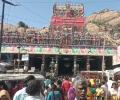
The Madras High Court has ruled that non-Hindus must pledge reverence and abide by traditional customs to enter Agamic temples, stating that failure to do so would compromise religious sanctity. The court criticised political figures for performative displays of faith and directed authorities to strictly enforce temple entry rules.

The Supreme Court has granted the Centre an extension until October 15 to file its response on petitions concerning the closure of metro stations and disruption of train services in Delhi during protests against Chief Election Commissioner Gyanesh Kumar and the Special Intensive Revision of electoral rolls. The court also deferred a crucial hearing, issued notice on a petition challenging the immunity of election commissioners, and sought a Delhi Police officer's presence regarding alleged assaults on women journalists. Earlier, the court had directed authorities to ensure normal public transport and prevent unlawful detentions.

The Bombay High Court has observed that while peaceful demonstration is a fundamental right, factors like a protestor's credentials and public inconvenience must be considered before restricting police action. The court directed the Maharashtra government to respond to petitions alleging illegal detention during recent anti-CEC protests and also noted the need to consider protesters' antecedents.
Kerala's Electricity Minister Sunny Joseph stated that criticism regarding the state government's initial decision for a preliminary inquiry in the alleged CMRL payments case, involving former CM Pinarayi Vijayan and his family, would subside following a recent Supreme Court verdict. Health Minister K Muraleedharan also affirmed that the SC order vindicated the government's cautious approach, which prioritised a preliminary inquiry over immediate FIR registration based solely on the ED's request.

The Supreme Court has expressed shock and concern over the increasing number of digital arrest scams, questioning why educated individuals continue to fall victim despite public awareness. The court highlighted a case where a woman lost Rs 2.5 crore and suggested that banks should act as a protective umbrella for customers. It is considering directing banks to compensate victims and face prosecution if fraud occurs due to their negligence, noting that digital arrests have already reduced by 50 per cent after its intervention.

The Supreme Court has instructed the Election Commission to probe allegations of irregularities, specifically concerning bulk Form 7 applications, during the special intensive revision of electoral rolls in Uttar Pradesh. The court's directive came after petitioners raised concerns about the deletion of voters' names, with the EC acknowledging bulk submissions but stating they were not acted upon due to being false.

The Digital News Publishers Association (DNPA) has informed the Supreme Court that newsrooms will be forced to shut down if journalists are required to seek permission before publishing information under the Digital Personal Data Protection (DPDP) Act and its accompanying Rules. The Supreme Court has issued notices to the Union ministries of Law and Justice, and Electronics and Information Technology (MeitY) on the DNPA's petition.
The Supreme Court has made permanent its order protecting a journalist from coercive action in a road rage case and quashed a police notice to 'X' seeking his digital details. The court noted the police sought data from before the alleged crime and granted the journalist liberty to challenge the FIR and seek guidelines for data collection.

The Supreme Court has asked the government to consider designating an alternative venue to Jantar Mantar for peaceful protests in the national capital, emphasising the need for a site with basic amenities. This suggestion arose during a hearing concerning proposed restrictions on metro stations and train cancellations due to a protest.
A curative petition has been filed in the Supreme Court challenging the September 23 split verdict on the Chief Election Commissioner and Other Election Commissioners (Appointment, Conditions of Service and Term of Office) Act, 2023. The petition, filed by Jaya Thakur, alleges a "reasonable apprehension of bias" due to claims that Justice Satish Chandra Sharma's son is a standing counsel for the Election Commission, raising questions about judicial propriety.

The Madhya Pradesh High Court has rejected the bail plea of former district judge Giribala Singh, who is implicated in the alleged suicide of her daughter-in-law, Twisha Sharma. The court cited ongoing investigations, pending forensic reports, and the gravity of the allegations, including abetment to suicide and dowry harassment, as reasons for its decision.
The Supreme Court on Monday refused to entertain a plea by alleged conman Sukesh Chandrasekhar seeking a stay on his conviction in a criminal case. Chandrasekhar was previously convicted and sentenced to eight years in jail by a Delhi court for impersonating a Supreme Court judge to influence a special judge for bail in a 2017 corruption case. The Delhi High Court had also dismissed his application for a stay on his conviction.
